
1000 Guineas Betting: The Complete Guide to Tips, Odds & Strategy
Data-backed tips for Britain's fillies' Classic.
The 1000 Guineas opens the British Flat Classic season every spring, and for punters who follow fillies' racing, it represents the sharpest test of form-reading and market analysis on the calendar. Run over one mile at Newmarket's Rowley Mile course, this Group 1 contest draws the best three-year-old fillies in training, and in 2026 the race continues its tradition as the ultimate proving ground for future champions.
What makes this Classic so compelling from a betting perspective is the intersection of elite form, uncertain stamina, and bookmaker margins that fluctuate more wildly than in any other British Classic. With attendance at British racecourses reaching 5.031 million in 2025—the first time the figure exceeded five million since 2019 according to the BHA Racing Report—the fillies' Classic at Newmarket has never attracted more eyeballs. The prize fund for the 2025 renewal stood at £525,000, underlining the commercial stakes alongside the sporting prestige.
The Data-Backed Essentials for 1000 Guineas Punters
- Course form is non-negotiable: nine of twelve recent winners had raced at Newmarket before, and the Fillies' Mile remains the most reliable trial.
- Favourites fail more often than they win in this race—only two of twelve market leaders from 2013 to 2024 delivered—so value often lies outside the top of the market.
- The bookmaker margin averages 121 per cent over the past twenty years, meaning each-way bets require careful calculation to avoid backing into built-in losses.
- Affordability checks now trigger at £150 net monthly deposits, so plan your staking before the spring if you intend to bet at scale.
- Ante-post offers the best prices, but standard terms mean your stake is lost if your filly does not run—Non-Runner No Bet terms, where available, trade odds for security.
Race Overview: Newmarket, Rowley Mile, and the Fillies' Classic
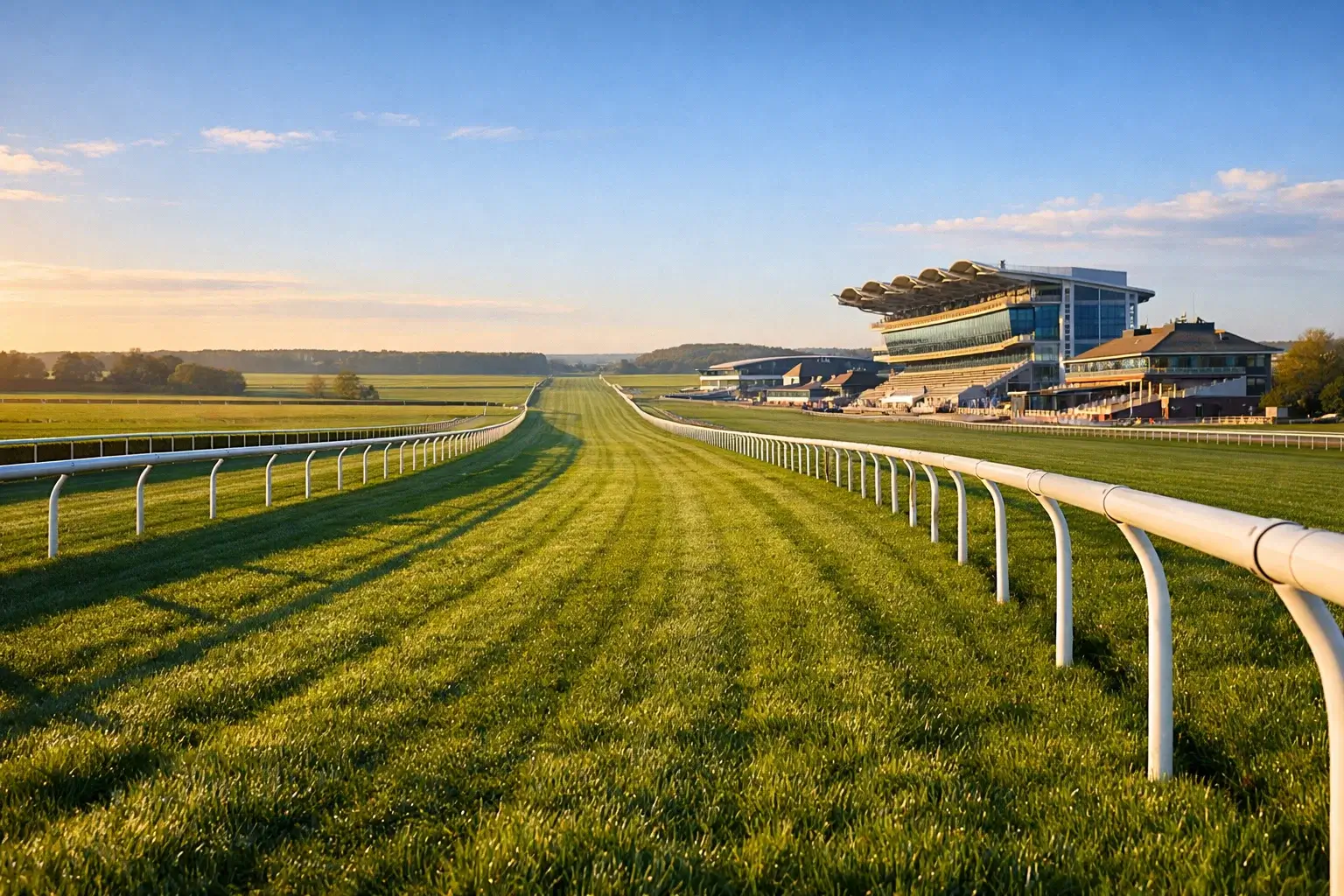
The 1000 Guineas sits at the top of the fillies' racing calendar in Britain, a Group 1 contest held on the first Sunday of May at Newmarket. In 2026, that means 3 May, with a scheduled start time of 15:35. The race is restricted to three-year-old fillies carrying 9 stone over the straight mile of the Rowley Mile course—one of the most testing tracks in European racing, owing to its undulating final two furlongs and unforgiving emphasis on tactical speed.
Newmarket has hosted the race since its inception in 1814, with the exception of the war years when the contest was moved to substitute venues. The Rowley Mile's straight course, named after King Charles II's nickname, offers no cover for horses and no margin for error for jockeys. Every contender must handle the descent into the Dip approximately two furlongs from home, then find the reserves to climb the rising ground to the winning post. Fillies who lack acceleration or who fail to travel smoothly through the race often come unstuck here.
The sponsorship of the race has evolved over the years. From 2011 to 2024, QIPCO backed the contest as part of its British Champions Series sponsorship. Since 2025, Betfred has taken over naming rights, continuing the tradition of major betting operators aligning themselves with Britain's premier Flat Classics. The shift in sponsor coincided with a boost in prize money: the guaranteed fund rose to £525,000 in 2025, with the winner taking home over £310,000.
Placing this in the broader context of British racing economics, the industry saw total prize money reach a record £194.7 million across all fixtures in 2025—a 3.5 per cent increase on the previous year. The 1000 Guineas forms part of a Guineas Festival weekend at Newmarket that also features the 2000 Guineas for colts, the Newmarket Stakes, and several valuable handicaps. For bettors, the weekend represents the first major concentration of Classic form since the previous season's trials at Newmarket and Leopardstown.
From a betting standpoint, the race typically attracts a field of between eight and fourteen runners, with an average field size on Premier Flat fixtures hovering around 11.02 runners according to 2025 BHA data. Larger fields generally mean more competitive markets, though the 1000 Guineas often features one or two short-priced favourites from the major operations at Ballydoyle and Godolphin, making the market dynamics distinct from open handicaps.
The Rowley Mile demands more than raw talent. Fillies must show resilience, tactical flexibility, and the ability to find an extra gear when the ground rises away from them. Understanding this track's demands is the first step toward reading the 1000 Guineas market with any confidence.
History and Prestige: From 1814 to Modern Guineas
The 1000 Guineas began in 1814, five years after its colts-only counterpart, the 2000 Guineas. The race was conceived as a test of speed for fillies at a time when the St Leger and Oaks dominated the Classic calendar. Two hundred years later, the race remains the opening fillies' Classic of the British season and the first major indicator of which three-year-old fillies will shape the campaign.
That longevity speaks to something broader than tradition. British racing contributes an estimated £4.1 billion to the UK economy annually, supporting approximately 85,000 jobs according to written evidence submitted to the House of Commons. Within that ecosystem, the Classics serve as the centrepiece events that drive media coverage, international interest, and betting volume. The 1000 Guineas is not merely a historic footnote; it is an economic engine for an entire season.
Across its 210 runnings through 2025, the race has produced some of the greatest names in fillies' racing. Forty-nine winners have gone on to complete the 1000 Guineas and Oaks double, beginning with Neva in 1817 and most recently Love in 2020. Seven fillies have achieved the Fillies' Triple Crown—winning the 1000 Guineas, Oaks, and St Leger in the same season: Hannah in 1871, Apology in 1874, La Flèche in 1892, Pretty Polly in 1904, Sun Chariot in 1942, Meld in 1955, and Oh So Sharp in 1985. That four decades have passed since the last Triple Crown winner underlines how difficult the feat has become in an era of specialism and international campaign schedules.
Four fillies have won both the 1000 and 2000 Guineas: Crucifix in 1840, Formosa in 1868, Pilgrimage in 1878, and Sceptre in 1902. The absence of any dual-Guineas winner in the modern era reflects both the increased depth of colts' racing and the commercial pressures that discourage fillies from taking on male rivals in Group 1 company.
In the modern era, the race has been dominated by a small group of powerful operations. Aidan O'Brien at Ballydoyle holds the record for the most 1000 Guineas victories by a trainer, with seven wins, supported by an infrastructure that produces Classic contenders every spring. His approach to fillies' Classics, often running multiple entries to cover tactical scenarios, has shaped how punters read the market. Godolphin, under Charlie Appleby in Newmarket and Saeed bin Suroor before him, represents the primary challenger, with Desert Flower's 2025 victory underscoring the operation's strength in fillies' racing.
The global racing market is now valued at approximately 1.3 billion, with forecasts projecting growth to 0.2 billion by 2030. Britain remains central to that market, and the 1000 Guineas continues to function as the launchpad for fillies who will define their generation. Understanding the race's history is not nostalgia—it is context for why the market behaves as it does, why certain trainers attract disproportionate support, and why winners of this race often command inflated prices in post-Classic markets.
The breeding patterns behind recent winners reveal another layer of the market. Galileo, the dominant sire of his generation, produced four of the five winners from 2016 to 2020: Minding, Winter, Hermosa, and Love. By the time of his death in 2021, Galileo had sired 92 individual Group 1 winners—a world record later extended to over 100 through his progeny's post-retirement performances. For punters, an awareness of bloodlines offers predictive value. Fillies by proven Classic sires from major studs tend to attract market support regardless of their form lines, which can create either value or traps depending on how the market has priced the connection.
The absence of a Frankel-sired winner in the 1000 Guineas remains one of the more intriguing gaps in modern Classic racing. Frankel's daughters have won virtually every other British Classic, yet the 1000 Guineas has eluded them. Whether that changes in 2026 or beyond depends on the mating choices of the major studs and the performance of fillies yet to race—but it is a pattern punters should note when assessing ante-post markets.
How Betting on the 1000 Guineas Works
Betting on the 1000 Guineas operates within the same regulated framework that governs all horse racing markets in Britain, but the economics of that framework have shifted considerably in recent years. For punters, understanding where the money flows—and where it gets held up—is essential context before placing a stake.
The gross gaming yield from online horse racing betting in Great Britain reached £766.7 million in the financial year ending March 2025, according to the Gambling Commission. That figure places horse racing second only to football in the remote betting category. Yet this headline number masks a less encouraging trend: total betting turnover on British racing fell by 4.3 per cent compared to 2024, and by 10.7 per cent compared to 2023. The average turnover per race dropped 5.6 per cent year-on-year, indicating that while the industry remains significant, the punting pool is shrinking.
One reason for that contraction is structural. Off-course betting turnover on horses stood at £3.33 billion as of March 2023—42 per cent below the level recorded in March 2009. The migration to online betting has not fully compensated for the decline of the high-street bookmaker, and new regulatory interventions have further compressed the market.
The Horserace Betting Levy Board collects a 10 per cent charge on bookmakers' gross profits from British racing. The yield for 2024/25 reached approximately £109 million, the highest figure since the Levy was reformed in 2017. Anne Lambert, the HBLB's Interim Chair, noted in the 2024-25 Annual Report that the Board would "exercise appropriate prudence in expenditure decisions and maintain sufficient reserves as bookmakers' increased profits are being generated from falling turnover." That paradox—higher bookmaker profits on lower turnover—has implications for market liquidity and the odds available to punters.
The Levy funds prize money, integrity services, and veterinary research. For 2026, the Levy Board allocated £77.1 million in its funding package, which directly supports the races on which punters bet. Without this funding, the quality and depth of British racing would be compromised, and so would the betting markets built around it.
When placing a bet on the 1000 Guineas, punters can choose win-only, each-way, or place betting, as well as forecast and tricast options. Ante-post markets open months in advance, offering the potential for superior odds at the cost of Non-Runner No Bet protection. Each-way betting at standard terms—one-fifth the odds for the first three places—remains popular in fields of eight runners or more, where the place fraction offers genuine coverage.
As HBLB Chief Executive Alan Delmonte observed in the 2024-25 report, major festival months can produce significant swings in bookmaker profitability: "The last two months, February and March 2025, saw bookmakers' gross profits well above recent norms, with March's outturn reflecting particularly bookmaker-friendly results at the Cheltenham Festival." For punters, the corollary is clear: the market is shaped by factors beyond form, and understanding those factors matters.
Key Trends and Statistics That Shape the Market
Data separates informed betting from guesswork, and the 1000 Guineas offers a rich statistical record for punters willing to dig. The numbers do not guarantee winners, but they do narrow the field in ways that matter when the market is pricing fifteen runners and you need to know which ones deserve your attention.
Start with favourites. Across the entire history of the race, 81 of 210 winners—38.5 per cent—have been the favourite or joint-favourite at the off. That number might suggest favourites are a solid play, but the recent record tells a different story. Only two of the last twelve winners were sent off as market leader. Minding, who won at 11/10 in 2016, was the last favourite to land the prize before Desert Flower returned the sequence in 2025 at Evens. For the intervening nine years, backing the jolly would have returned nothing.
Course form matters. Nine of the last twelve winners had at least one previous start at Newmarket before their 1000 Guineas run. The straight mile of the Rowley Mile places specific demands on a filly's acceleration and balance, and those without prior course experience have historically struggled to handle the Dip at pace. That does not mean debut winners are excluded—rather, it means fillies who arrive having run well on the track carry a demonstrable edge.
Trial races are essential markers. Six of the last ten winners had run in the Fillies' Mile at Newmarket within their three most recent starts. The Fillies' Mile, run the previous October over the same straight mile, serves as the most reliable guide to Guineas form. The Nell Gwyn Stakes, staged at Newmarket two weeks before the Classic, has produced four Guineas winners since 2006, offering a more recent form line but over a shorter seven-furlong trip. Fillies who skip major trials entirely tend to be unproven at the highest level, regardless of their breeding or connections.
Field composition affects pace and positioning. The average field size on Premier Flat fixtures in 2025 was 11.02 runners, compared to 8.90 across all Flat races. A larger field typically leads to a stronger pace, which benefits fillies who race prominently and can sustain their effort up the rising ground. In smaller fields, hold-up tactics become more viable, and the market often underprices pace-setters who control the tempo from the front.
Trainer Aidan O'Brien, whose Ballydoyle operation has dominated fillies' Classics for two decades, framed the Classic challenge succinctly: "A sprinter is a Classic horse who doesn't get a mile or you could say a miler is a sprinter who stays." That observation captures the essential test of the 1000 Guineas. It is a race for speed horses who find a little extra, not stamina horses who lack gears. Punters should weight their analysis accordingly—and discount fillies whose form is built on sustained galloping rather than sharp acceleration.
The horse population itself is changing. The number of horses in training in Britain declined to 21,728 in 2025, a drop of 2.3 per cent from the previous year. The BHA projects that starts will be six to seven per cent lower by 2027 than in 2024. That contraction means fewer runners in the trial races that feed the Classics, and potentially fewer competitively priced outsiders in the market.
Breeding trends offer another analytical lens. The dominance of certain sire lines—Galileo's influence between 2016 and 2020, for instance—established Ballydoyle bloodlines as the benchmark for Guineas fillies. Night Of Thunder, the sire of 2025 winner Desert Flower, represents a different speed-oriented line through Dubawi. Punters who track the performance of sire lines in mile races gain an edge over those who focus solely on individual form. A filly by a proven miler sire, out of a dam who showed speed at two, fits the Guineas profile more reliably than one bred for stamina.
Post-race performance provides retrospective validation. Five of the last twelve winners went on to win their next start, while three contested the Irish 1000 Guineas at the Curragh within weeks of their Newmarket success. For punters thinking beyond the Classic itself, understanding which winners translate their form and which peak on the day can inform Oaks and Royal Ascot markets in the weeks that follow.
Betting Strategy: Odds, Value, and Bankroll
Finding value in the 1000 Guineas market requires more than picking likely winners. It requires understanding bookmaker margins, the regulatory landscape that shapes bet sizing, and the discipline to manage stakes when the market is moving against you.
Understanding Overround and Margin
The average overround on the 1000 Guineas market over the past twenty years is 121 per cent, according to analysis from OLBG. That means bookmakers build in a 21 per cent margin across the field, though the figure varies considerably by year. The most competitive market in recent memory was 2025, when overround dropped to 115 per cent amid a dominant favourite and a compressed field. The least competitive was 2023, at 130 per cent, when an open race encouraged bookmakers to widen their margins.
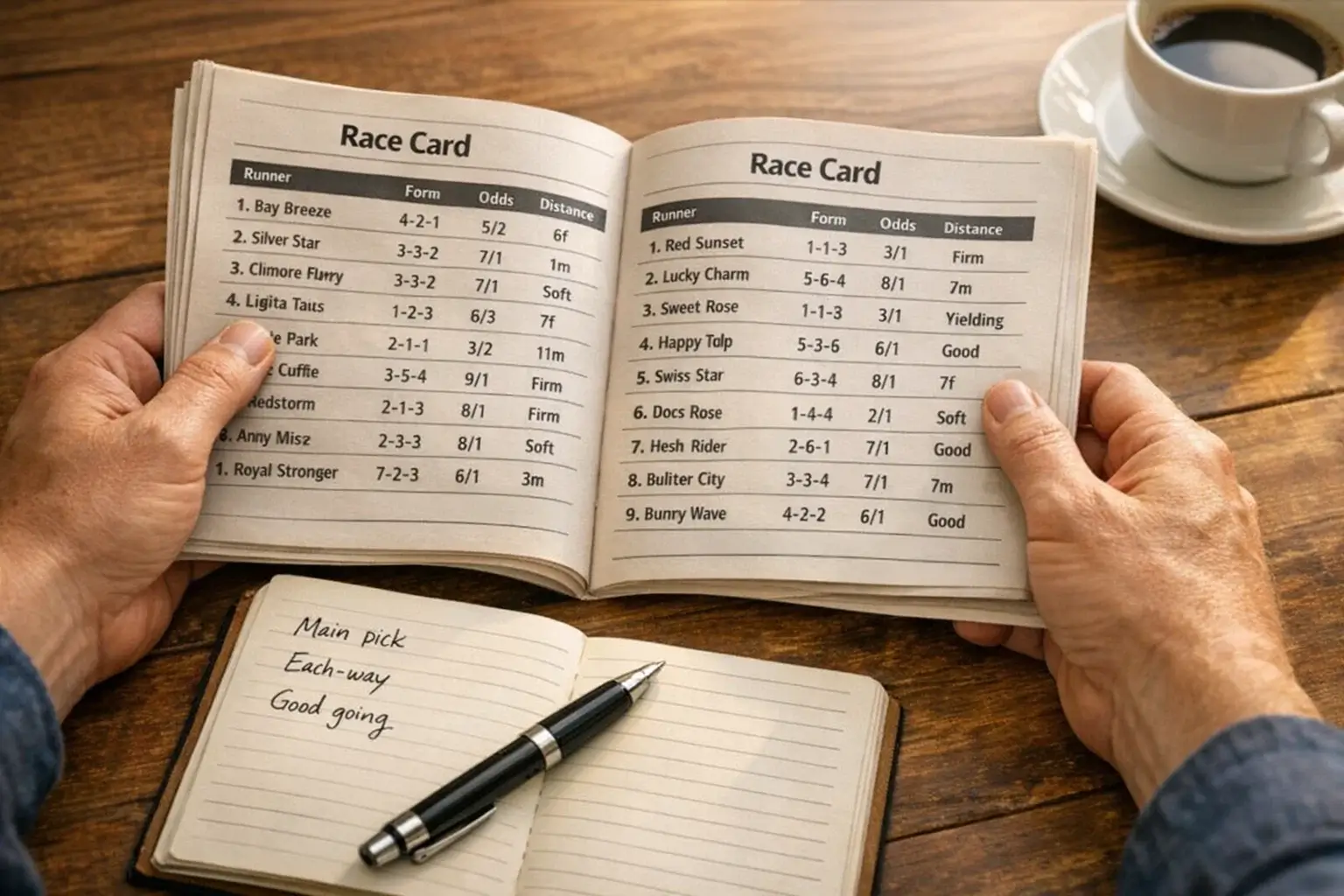
For punters, overround affects each-way calculations directly. A higher margin compresses place odds, making each-way betting less attractive relative to win-only stakes. In a 121 per cent market, a 10/1 shot offers place odds of roughly 2/1 at one-fifth terms—but the true odds, adjusted for margin, may be closer to 6/4. Punters who fail to account for overround risk betting into markets where the maths already favours the bookmaker.
The Affordability Check Reality
Since February 2025, UK-licensed bookmakers have been required to conduct affordability checks when a customer deposits £150 net in a month, or loses £1,000 in 24 hours, or £2,000 over 90 days. These thresholds are far lower than previous limits, and they have reshaped the betting market in ways that affect both casual and serious punters.
Richard Wayman, Director of Racing at the BHA, stated plainly: "I have no doubt [the drop in betting revenue was] headed by the impact of affordability checks." The Racing Post's Big Punting Survey in 2025 found that 61 per cent of respondents refused to provide the financial documents required to pass enhanced checks. Among bettors staking £1,000 or more, over a third reported using unlicensed operators to avoid the scrutiny.
The migration to the black market is measurable. The share of bettors using unlicensed bookmakers rose from 3.6 per cent in 2023 to 4.9 per cent in 2025. Gambling Commission data shows that online horse racing turnover fell by approximately £3 billion in real terms over two years, a shortfall that industry commentators have labelled the "£3 billion black hole." The Jockey Club has estimated potential damage to British racing at £250 million over five years if current trends continue, a figure drawn from analysis by industry consultants Regulus Partners.
For punters, the practical implication is straightforward: plan your stakes before the season begins. If you intend to bet significantly on the 1000 Guineas, you may need to provide documentation to maintain full access to your account. Alternatively, spreading stakes across multiple licensed operators—each with its own affordability threshold—remains a legal workaround, though one that complicates your record-keeping.
Bankroll Management in Classic Week
The temptation to overbet on Classics is real. These races attract attention, generate tips, and offer large fields where every selection feels like it might land. Discipline matters more here than in routine handicaps.
Grainne Hurst, CEO of the Betting and Gaming Council, noted that "for the fourth year running, [Levy] contributions have increased to record levels. This demonstrates the growing, long-term investment regulated betting provides British horse racing." That statement, while framed positively, reflects the fact that bookmakers are extracting more profit from a smaller pool of punters. Unless you have an edge—informed by form, market analysis, and a grasp of the data outlined elsewhere in this guide—the margin is stacked against you.
A sensible approach is to allocate a fixed percentage of your betting bank to Classic races and to divide that further across win, each-way, and speculative bets. If the favourite looks overpriced, back it. If the market seems overcompetitive, consider sitting out the win market and focusing on forecast or tricast options where overround is often higher but upside is greater. Never chase losses on the basis that a single Classic can rescue a bad week.
Ante-Post Guide: Early Markets and NRNB
Ante-post betting on the 1000 Guineas opens in the autumn, typically after the Fillies' Mile in October. For punters willing to commit early, the appeal is clear: odds are longer before the market crystallises, and a well-researched selection can offer multiples of the eventual starting price. The risk, of course, is equally clear—your selection may not run.
Standard ante-post terms mean that if your filly is withdrawn before race day, your stake is lost. There are no refunds for injury, travel issues, or a trainer's change of plan. This is why ante-post betting requires conviction: you are not just backing a horse to win, you are betting that it will make the race.
Non-Runner No Bet offers a compromise. Some bookmakers extend NRNB terms on major Classics from a week or two before the race, refunding stakes if your selection does not line up. The trade-off is tighter odds—typically several points shorter than standard ante-post prices. Whether NRNB is worth taking depends on your assessment of the filly's likelihood of running and your tolerance for variance. For established Classic contenders from major yards, the risk of non-participation is lower; for lightly raced fillies with unfamiliar preparation patterns, NRNB may be essential.
The affordability check thresholds discussed earlier apply equally to ante-post stakes. If you intend to place substantial wagers across the winter and spring, you may be asked to verify your financial position before proceeding. Planning your ante-post activity around these limits can help avoid disruption to your betting pattern during the critical weeks before the race.
Timing matters. Prices tend to shorten after major trials—the Fillies' Mile, the Cheveley Park Stakes in the autumn, the Fred Darling and Nell Gwyn in the spring. If you believe a filly will win her trial, backing her before that race locks in superior odds. If you want to wait for confirmation of form, you pay for that certainty through compressed prices.
The strongest ante-post plays historically come from fillies who won the Fillies' Mile convincingly and head into winter with a clear Classic profile. Waiting until spring often means backing into a market that the major stables already dominate, with their runners priced accordingly.
Multiple-selection strategies can mitigate ante-post risk. Rather than committing your entire stake to a single filly in November, consider spreading across two or three contenders at longer prices. If one does not make the race, your other selections may still run—and the combined odds of one landing can exceed what you would have received backing the eventual favourite at starting price.
Watch the supplementary entry stage closely. Fillies can be added to the 1000 Guineas up to five days before the race by paying a supplementary entry fee. When a highly regarded filly is supplemented—typically after a striking trial performance—the market moves sharply. If you anticipated her Classic potential before the supplement, you hold value; if you waited, you pay the premium.
Draw, Going, and the Rowley Mile Factor
The Rowley Mile is unlike any other course in Britain. Its straight ten-furlong track—the longest in the country—eliminates the bends that shape tactics at other venues and places pure emphasis on speed, stamina, and the ability to handle the terrain. For punters, understanding how the course plays is as important as reading the form.
The defining feature of the track is the Dip, a descent beginning approximately two furlongs from home, followed by a sharp rise to the winning post. Fillies who cannot maintain their rhythm through the Dip often lose ground fatally, while those with the balance to negotiate the undulation and the reserves to climb the hill tend to prevail. The 1000 Guineas, contested over a mile, asks runners to hold their position through the Dip at full racing pace and find more when the ground rises away from them.
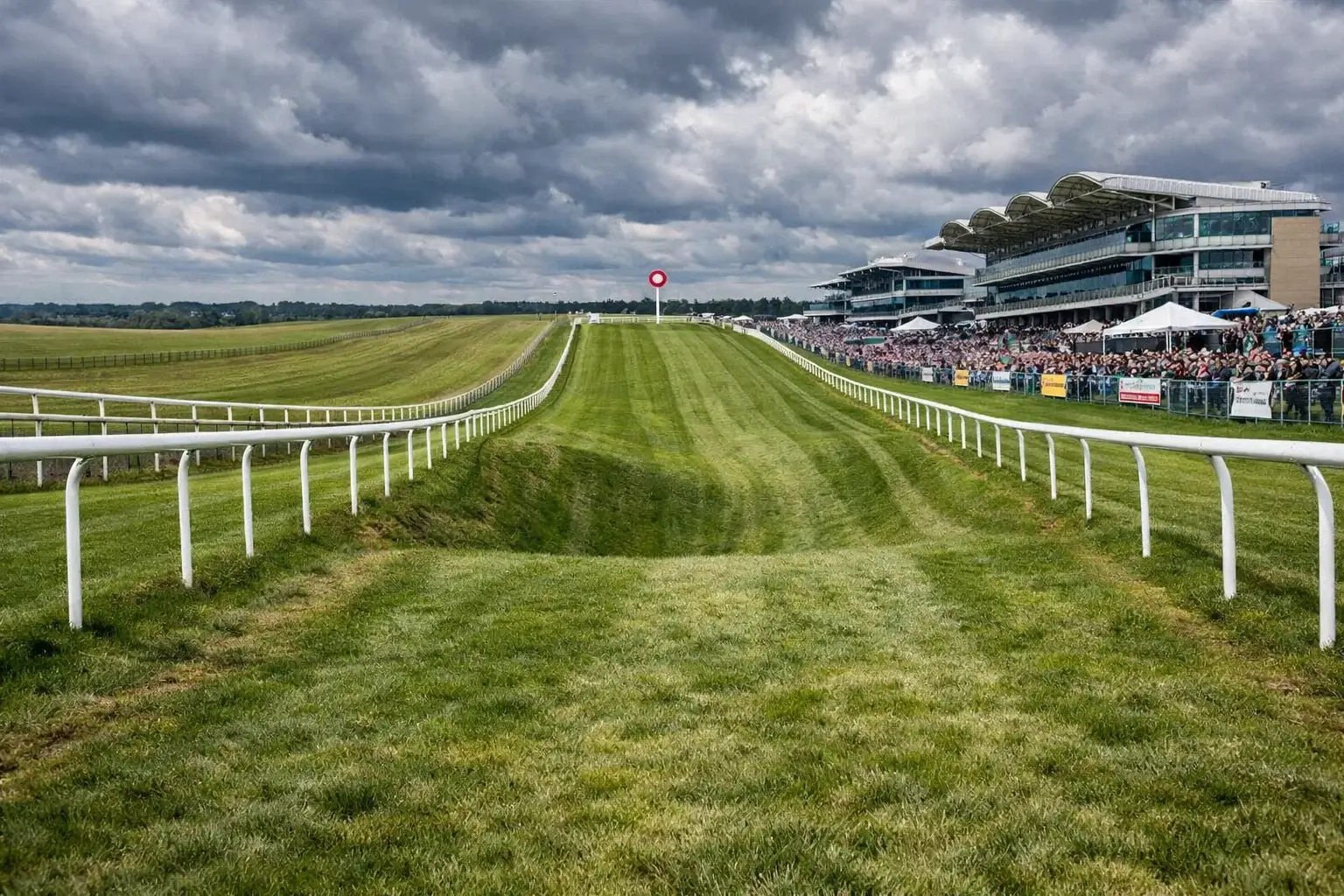
Winning times illustrate the range of conditions the race has produced. The fastest recorded time is 1:34.22, set by Ghanaati in 2009 on good to firm ground—a mark that reflects both exceptional talent and an optimally quick surface. The slowest in modern memory is 1:40.53, clocked by Speciosa in 2006, when the ground cut up significantly. Desert Flower's 2025 victory came in 1:36.81 on good to firm going, a time that places her in the upper tier of modern winners without challenging the record.
Draw bias on the Rowley Mile is an area of persistent debate, complicated by the fact that the rail positions are moved regularly to preserve the ground. Historical analysis of low versus high draws produces inconsistent results, and most professional form analysts treat the draw as a secondary factor rather than a primary one. In races where the pace is genuine and evenly spread across the field, stall position matters less than raw ability and tactical execution. In slower-run renewals, where one group dominates the pace, stalls on that side may confer an advantage—but predicting which side will control the pace requires forecasting jockey behaviour that is difficult to model.
Ground conditions matter more. Fillies with form on faster going have a clear edge on good to firm surfaces, where the Dip is less taxing and the emphasis shifts to pure speed. On softer ground, the race becomes a test of stamina as well as speed, favouring fillies with experience over further than a mile. Watching the weather in the days before the race, and tracking how the going is reported by the Jockey Club groundstaff, can inform both selection and stake sizing.
The Rowley Mile rewards the complete filly: one with speed, balance, courage, and the tactical awareness to be positioned correctly when the race turns serious at the two-furlong pole.
Jockey selection and riding styles influence outcomes on this course. William Buick, who rode Desert Flower to victory in 2025, described the filly's approach: "She's genuine, she's uncomplicated. She gets organised coming out of the dip, hits the rising ground — she's all class." That phrase—getting organised coming out of the Dip—captures what separates winning rides from disappointing ones. Jockeys who commit too early lose momentum on the climb; those who wait too long find themselves with ground to make up on a track that punishes late runs.
For punters, analysing jockey records at Newmarket over the Rowley Mile provides a secondary filter beyond form. Riders with a high strike rate on the straight course understand its rhythms and positioning requirements. When a proven course jockey is booked on a contender with solid form, the combination often represents better value than a higher-rated filly ridden by someone less familiar with the track's demands.
Past Winners and What They Reveal
The roll call of 1000 Guineas winners offers more than historical nostalgia. Analysing past victors reveals the profile of filly that succeeds in this race and the patterns that separate champions from disappointments.
Consider the career arcs that followed Guineas success. Love in 2020 illustrated the type that can bridge the speed of the Guineas and the stamina of the Oaks: a well-bred filly from a major operation, handled patiently, and brought to peak fitness on the day. Betting on the Oaks market after watching a dominant 1000 Guineas winner is a familiar pattern, though the market often moves sharply, compressing value before punters can react.
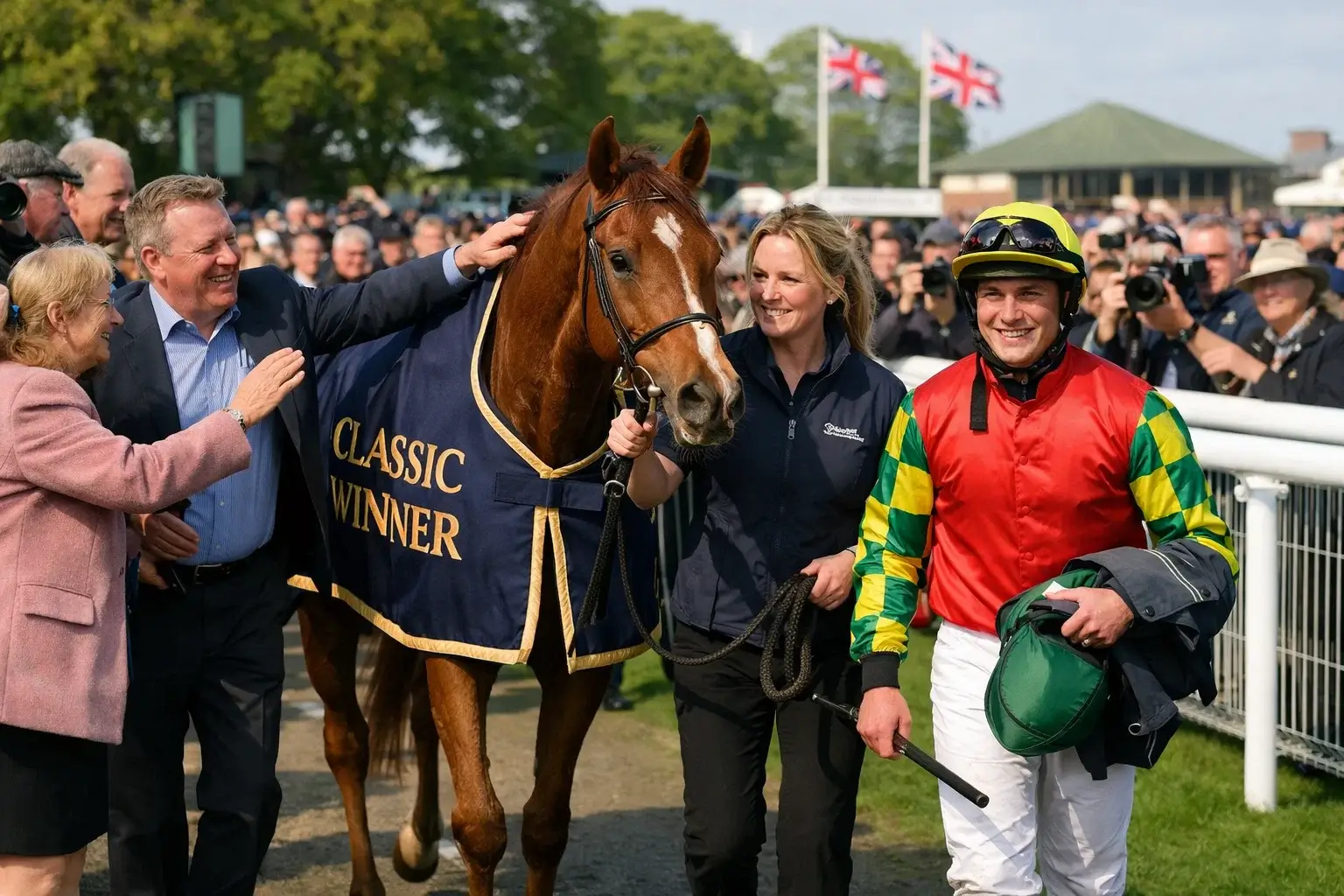
At the other end of the scale, Billesdon Brook in 2018 won at 66/1, the longest-priced winner in the race's modern history. Her victory came despite minimal market confidence and a form line that looked modest at the time. For punters, Billesdon Brook is a reminder that the race can surprise: favourites fail with regularity, and lightly raced fillies can step up dramatically on their seasonal debut.
Desert Flower's 2025 win at Evens restored normal service after a decade of beaten favourites, but the lesson from the record remains consistent: approach the 1000 Guineas with humility, back selections with conviction, and accept that long shots sometimes land.
The trajectory of winners after the race offers betting angles beyond the Classic itself. Five of the last twelve winners won their next start, typically either the Irish 1000 Guineas or the Coronation Stakes at Royal Ascot. Desert Flower became the first unbeaten winner since Attraction in 2004, arriving at Newmarket with a spotless record and leaving with her reputation enhanced. For punters, identifying fillies capable of continuing their winning streak opens value in post-Classic markets before the odds compress.
The connections matter too. Aidan O'Brien's seven 1000 Guineas wins make him the most successful trainer in the race's history, and Ballydoyle fillies consistently attract market support regardless of their public trials. Godolphin, through Charlie Appleby, has emerged as the primary rival, with Desert Flower's victory underlining the operation's strength in fillies' Classics. When these yards declare multiple runners, the market often struggles to separate them, creating opportunities for punters who can identify the stable's first string based on jockey bookings and pre-race signals.
Frequently Asked Questions
How do I bet on the 1000 Guineas—win, each way, or ante post?
Betting on the 1000 Guineas offers several options depending on your risk appetite and timing. Win-only bets are straightforward: you back a filly to finish first, and you collect if she wins. Each-way betting splits your stake in two—half on the win and half on a place finish, typically the first three in fields of eight or more runners. At standard terms of one-fifth the odds, a 10/1 each-way selection returns 2/1 for a place. Ante-post betting opens months before the race, offering longer odds in exchange for the risk that your selection may not run. If you back a filly in December and she is withdrawn in April due to injury, your stake is lost under standard terms. Non-Runner No Bet terms, offered by some bookmakers closer to the race, refund your stake if your selection is a non-runner, though prices are typically shorter. Each approach has its place: win-only suits punters confident in a single selection, each-way provides insurance on likely runners, and ante-post rewards those with the conviction and patience to commit early.
What are the main trends to consider when backing a 1000 Guineas contender?
Three trends have proven reliable over the past decade. First, course form matters: nine of the last twelve winners had raced at Newmarket before their 1000 Guineas victory, suggesting that familiarity with the Rowley Mile's undulations confers a genuine advantage. Second, trial performance is predictive: six of the last ten winners had run in the Fillies' Mile within their three most recent starts, while the Nell Gwyn Stakes has produced four Guineas winners since 2006. Third, favourites are inconsistent: only two of the twelve winners from 2013 to 2024 started as market leader, with Minding in 2016 and Desert Flower in 2025 the exceptions. The overall all-time favourite strike rate is 38.5 per cent, which sounds solid until you recognise that it means nearly two-thirds of favourites lose. Punters should weight course experience and trial form heavily, while treating market confidence with appropriate scepticism.
When is the 1000 Guineas 2026 and what time does the race start?
The 1000 Guineas 2026 is scheduled for Sunday, 3 May 2026, at Newmarket's Rowley Mile course. The race forms part of the Guineas Festival weekend, which also features the 2000 Guineas on the Saturday. The 1000 Guineas is typically the feature race of the Sunday card, with a scheduled start time of 15:35 local time. The race will be broadcast live on ITV in the UK and is available through racing streaming platforms for those with active subscriptions. Declarations close several days before the race, at which point the final field and draw are confirmed. Ante-post markets remain active until race day, though Non-Runner No Bet terms are usually applied from around a week before the race by participating bookmakers.